


Digital Triage—Help or Risk?
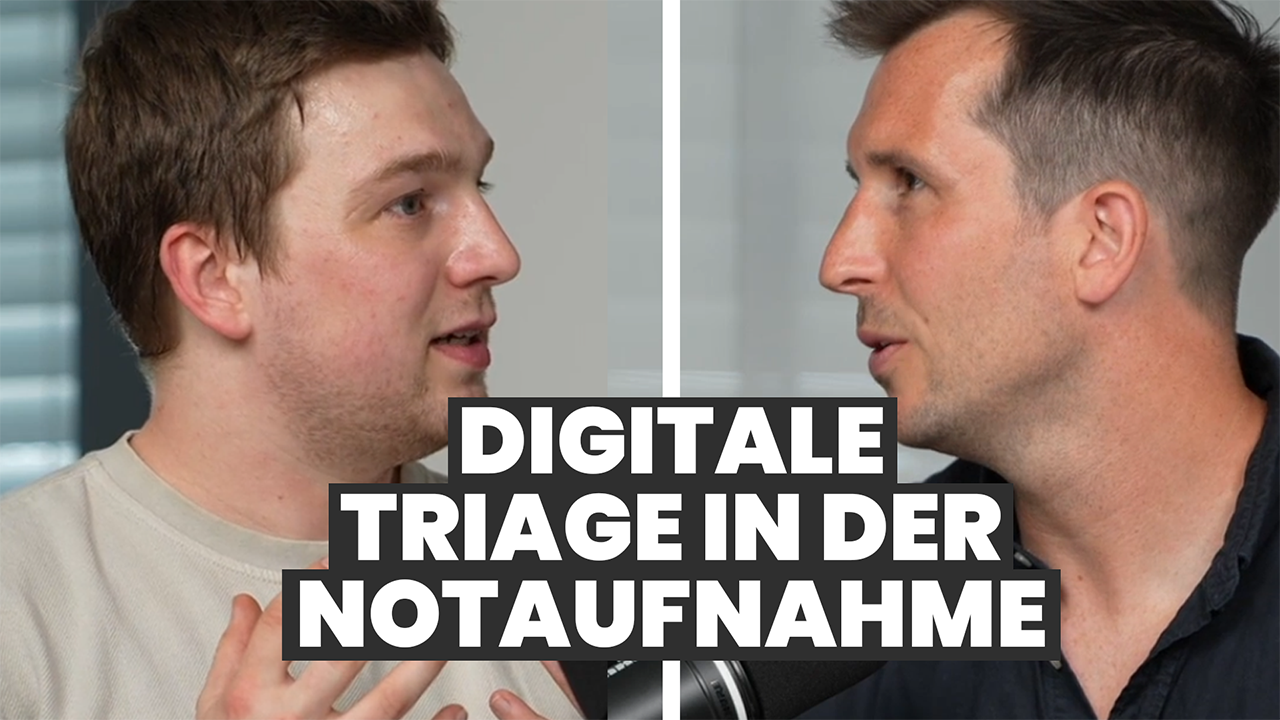
This is exactly where digital triage systems come into play. They are designed to help better direct patients, relieve pressure on emergency departments, and assess medical urgency earlier. But how well does this work in the day-to-day reality of a hospital?
In this episode, Rasmus Cloes talks with Timm Neeland about digital triage and the Patient+ system. Timm knows emergency care from multiple perspectives: as a trained emergency medical technician, a health scientist, and through his scientific evaluation of a Bremen emergency room.
The episode shows why digital tools in healthcare are never just technical solutions. It’s about trust, responsibility, fear, gaps in care, and the question of who ultimately makes the decision when speed is of the essence. One particularly important point: In Timm’s study, the agreement between digital assessment and medical evaluation was 54 percent. That raises questions—not about digitalization itself, but about the need to handle it with care.
After all, digital triage can provide guidance. It can support processes. But it must not lose sight of the human element.
An episode about overburdened emergency rooms, patient flow management, digital responsibility, and the future of acute care.
Watch or listen now and gain fascinating insights:YouTube, Spotify, Apple, Deezer