
How can collaborative technology development work?
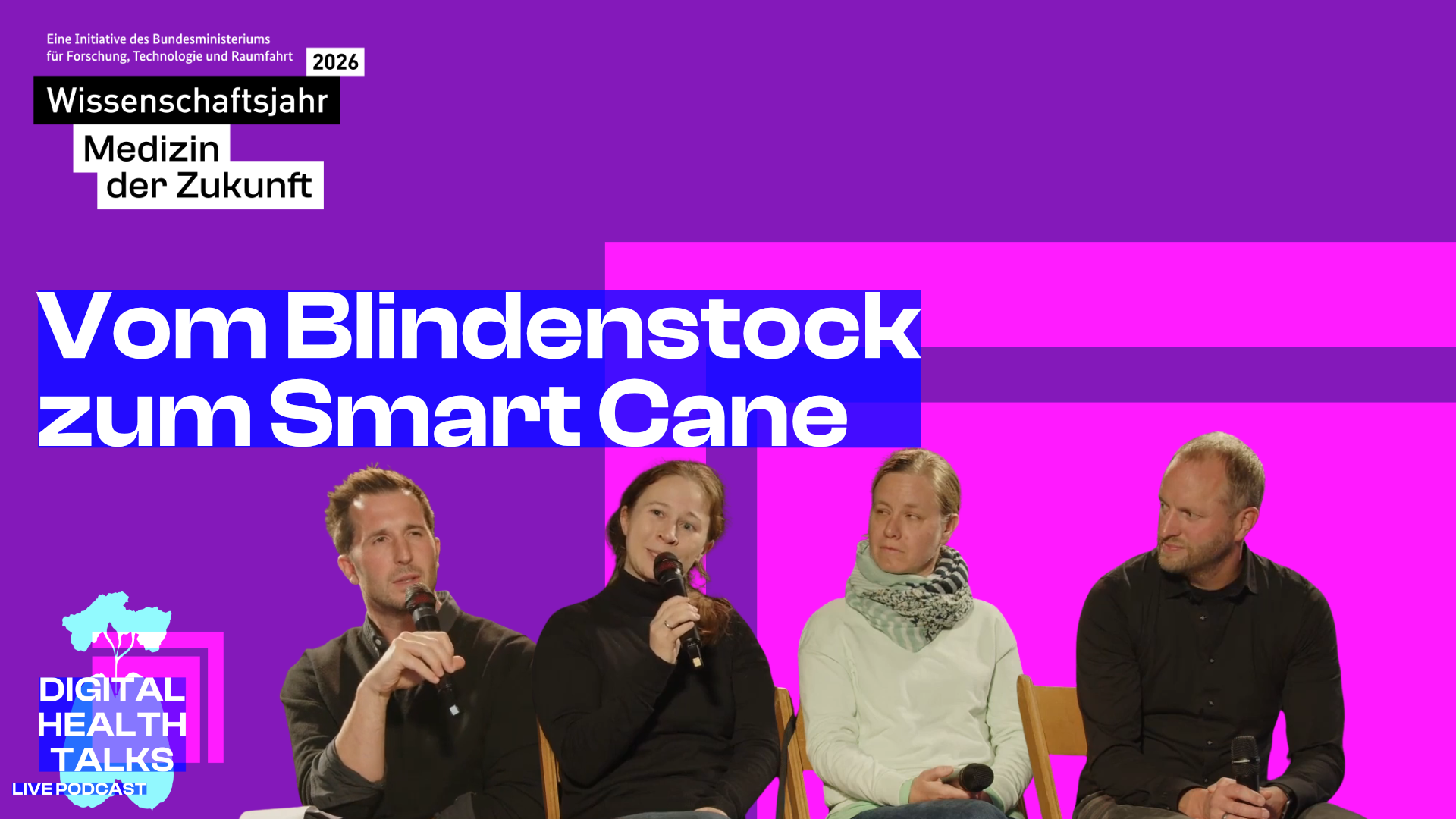
Can artificial intelligence make white canes “smarter”? Where can technology truly help, and where might it make things unnecessarily complicated? Researchers from various disciplines at Fulda University of Applied Sciences are working on these questions as part of the “ePart” project, in collaboration with people with visual impairments. In this live episode of the Digital Public Health Podcast, host Rasmus Cloes, Dr. Monika Wiechers, and Prof. Martin Kumm from Fulda University of Applied Sciences, along with Lea Widmer, chair of the Advisory Board for People with Disabilities (BMB) in Fulda, discuss the development process, obstacles, and solutions.

Four people sit onstage during a live podcast; two are holding microphones. Large white text behind them reads "Vom Blindenstock zum Smart Cane" and "Wissenschaftsjahr 2026 - Medizin der Zukunft" against a purple-and-pink background. The "Digital Health Talks - Live Podcast" logo appears at the lower left.

One idea runs throughout the conversation: technological development cannot succeed without the perspective of those directly affected. They should be involved early on, even if this means the original idea changes.

The event took place on October 27, 2026, at U1 in Fulda. It is part of the series “Digital Health Talks—The Live Podcast on the Health of the Future” organized by the University of Bremen and BIPS in cooperation with Fulda University of Applied Sciences and was funded by the BMFTR as part of the Science Year 2026—Medicine of the Future.

Watch or listen now and gain exciting insights: YouTube, Spotify, Apple, Deezer
More information: Website, Instagram