


Does digitalization make us healthy or sick?
[Translate to Englisch:]
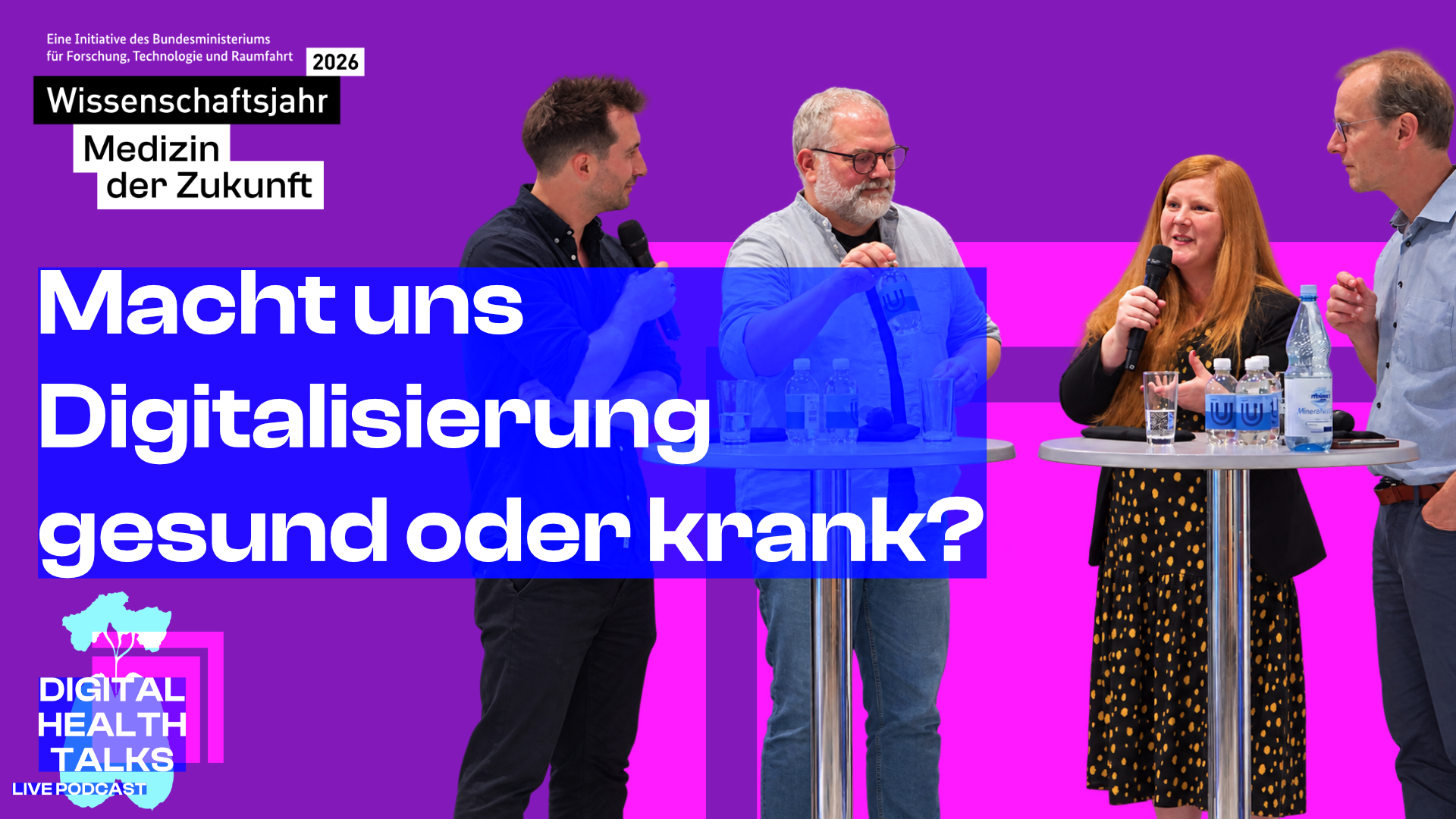
In this live episode of the Digital Public Health Podcast, host Rasmus Cloes and researchers Prof. Dr. Benjamin Schüz, Dr. Kathrin Seibert, and Prof. Dr. Hajo Zeeb discuss what digitalization could mean for our health and the healthcare system. The discussion covers digital health services, electronic health records, reliable health information online, and the use of technology in long-term care. Data protection, trust, social inequalities, and the question of how effective digital solutions actually are in everyday life are also addressed.
One central idea runs throughout the conversation: Digital solutions should be based on people’s needs, developed in collaboration with them, and evaluated for their actual benefits. They can support care and streamline processes—but they cannot replace human compassion or a solid analog framework.
The event took place on October 3, 2026, at the Wissenschaftsforum Bremen. It is part of the series “Digital Health Talks—The Live Podcast on the Health of the Future” and was funded by the BMFTR as part of the Year of Science 2026—Medicine of the Future.
Watch/listen to our podcast:
YouTube
Spotify
Apple
Deezer
The Digital Public Health Podcast is a production of the Leibniz Institute for Prevention Research and Epidemiology (BIPS) and Health Sciences Bremen.